vaulta-battery-pack

Brisbane battery manufacturer makes moves into US market

Queensland battery manufacturer Vaulta has partnered with American company eFinery Energy to explore the feasibility of deploying its battery systems in the United States and establishing a licensed assembly facility in that country.

Vaulta announced it has signed a Memorandum of Understanding (MoU) with Efinery Energy to collaborate on scaling the Australian company’s lithium battery technology in the United States (US) with the partners aiming to unlock up to 5 GWh of energy storage opportunities.

Brisbane-based Vaulta said the partnership with eFinery will explore the export and licensing of its lithium energy storage manufacturing processes to the US, paving the way for localised production and deployment of high-performance battery systems.

Efinery Chief Executive Officer Michael Gurin said the company plans to integrate Vaulta’s manufacturing processes and smart battery management systems with its portfolio of microgrids, last-mile energy systems and behind-the-meter applications.

“Partnering with Vaulta allows eFinery to access state-of-the-art battery technology, enabling us to deliver reliable, scalable, and sustainable energy solutions,” he said. “This alliance solidifies our commitment to transforming energy markets and creating lasting value for customers and communities.”

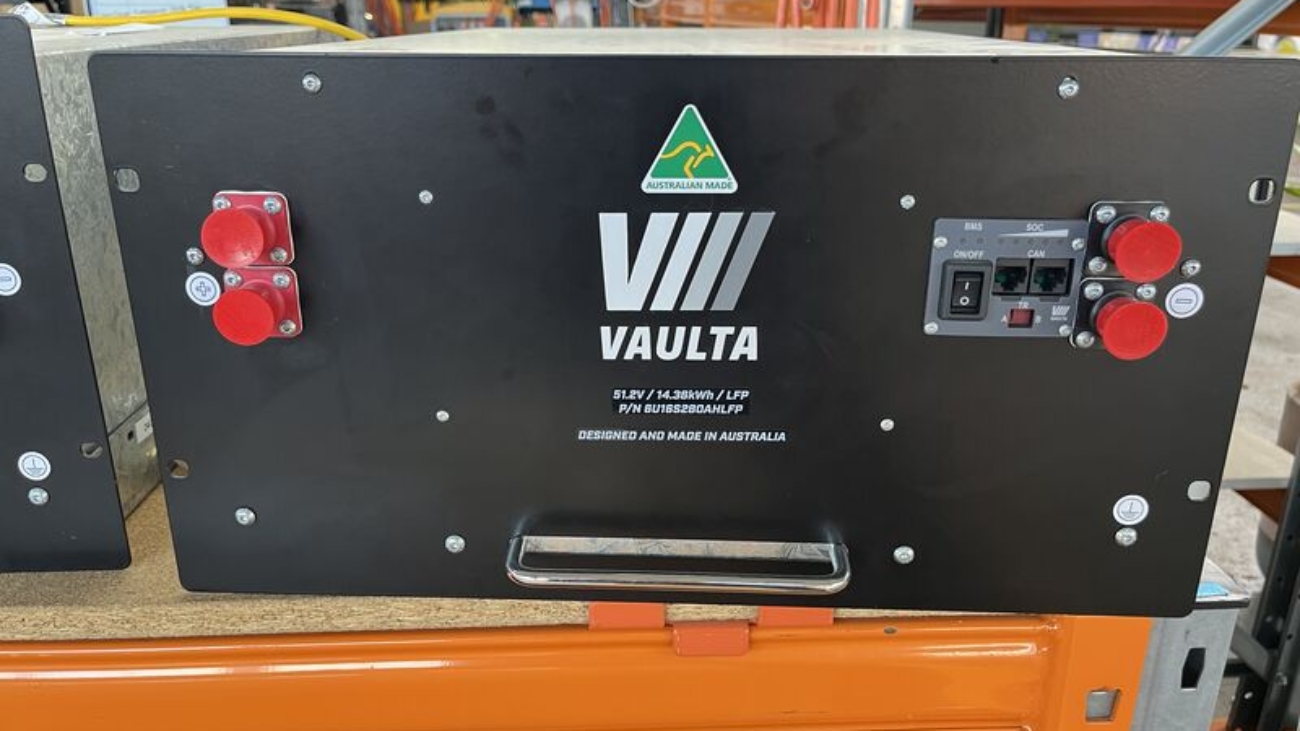
Founded by product design specialist Dominic Spooner in 2019, Vaulta makes recyclable batteries for energy storage applications ranging from electric vehicles to defence and stationary storage. Its patented no-weld, easy-to-disassemble battery cases allow for internal cells to be removed, recycled and reused, and for new cells to be added as battery technology evolves.

Spooner said the partnership with eFinery will allow for a joint focus on market analysis and business development across the US.

“Vaulta’s revolutionary lithium solutions combined with eFinery’s dynamic market reach represent a powerful synergy to accelerate energy storage adoption in the US,” he said.

The non-binding agreement is initially set for six months, but Vaulta said it “underscores a shared commitment to advancing sustainable energy tech and expanding manufacturing capabilities across North America,” adding that “with the US energy storage sector poised for exponential growth, the alliance anticipates deploying up to 5 GWh of energy storage capacity.”

Spooner said the partnership will initially focus on Vaulta’s existing products but he expects to tailor the company’s approach based on market feedback and specific project needs that emerge from the collaboration.

“Mostly focusing on products we make here, being the 14 kWh battery, and then bespoke solutions and systems design,” he said. “It’s likely to expand though, as we’re the battery expert and support will be a big part of the partnership.”

Spooner acknowledged that a move into the US market will not be without its challenges but said both parties are prepared to work through any potential roadblocks.

“The main challenges we see are navigating regulatory requirements for battery systems in various US states, aligning with local content preferences, establishing reliable supply chains, and building commercial traction in a very competitive market,” he said.

“We’re also assessing the investment needed for local assembly and the complexities around certification and compliance.”

Spooner said tariffs will also be an ongoing issue to watch.

“But that’s mostly on cells which is unavoidable until they find a local supplier, which they say they have,” he said. “Then the challenges will of course be resources. A smaller business like Vaulta needs staff and people here but will need to be able to support the work there also.”

Source:
From pv magazine Global

1752041563222-1200x675

$6.6 million neighbourhood batteries program kicks off final funding round

The Victorian government has launched its third and final round of grant funding through the 100 Neighbourhood Batteries Program, offering $400,000 per battery through multiple streams of eligibility to a pool of nine council regions.

The Victorian government has launched its third and final round of grant funding through the 100 Neighbourhood Batteries Program (100NBP), offering $400,000 per battery through multiple streams of eligibility, to a pool of nine council regions, which have not previously received funding under previous rounds.

To date, 90 neighbourhood-scale batteries have been funded through the program, with Round 3 offering three streams of eligibility to encourage projects that will deliver network benefits, community benefits, and energy resilience.

In Stream 1, funding of up to $400,000 per battery, sized from 20 kW / 40 kWh up to a maximum 5 MW / 20 MWh, will be provided for projects that put into place one or more neighbourhood batteries (including installation and commissioning), and can prove quantified benefits for the network.

Delivering community benefits through Stream 2 requires proof of quantified benefits for the local community only, with all other details the same as Stream 1, except needing to fulfil network benefits.

Delivering energy resilience through Stream 3 also provides up to $400,000 for projects that implement one or more energy back-up systems that are capable of continuing to supply power to one or more publicly accessible building/s during grid outages.

Each energy back-up system must include a neighbourhood battery and may also include installation of one or any solar, generator and management systems.

Proponents are not limited one battery or back up system application, but all projects are to be included in the one submission and if it exceeds the $400,000, where two batteries might be priced $120,000 and $300,000, the government will honour the $450,000 funds, if the application is successful.

A total of $18.44 million in grant funding through the program has helped to unlock $6.89 million in private investment, the government says and injected $25.3 million into the Victorian economy.

The council areas eligible to apply are Campaspe Shire Council, City of Casey, Macedon Ranges Shire Council, Maribyrnong City Council, Moira Shire Council, Moonee Valley City Council, Wellington Shire Council, City of Whittlesea, and Wyndham City Council.

Round 3 of the 100 Neighbourhood Batteries Program opens 15 July 2025 and closes 15 September 2025. Projects must be completed by 31 August 2026.

Source:
From pv magazine Global

kiar-battery-project-render

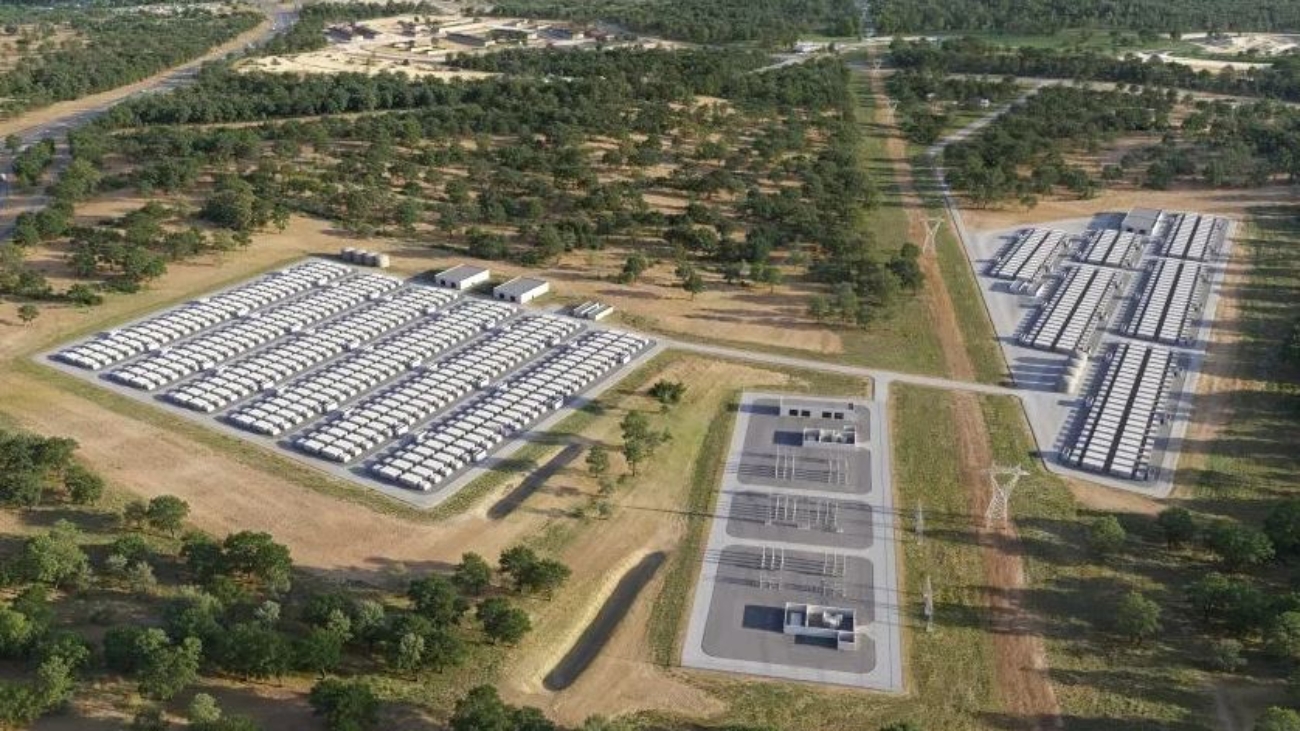
Bid Energy plans 4 GWh battery project for Central Coast

Another big battery project has been unveiled for New South Wales with the state and federal governments receiving a proposal for a 1 GW / 4 GWh battery energy storage facility to be developed at Kiar, on the Central Coast.

Australian developer and energy sector advisory Bid Energy Partners has unveiled plans to build a grid-scale battery energy storage system (BESS) with a discharge capacity of approximately 1 GW and storage capacity of approximately 4 GWh at Kiar on the New South Wales (NSW) Central Coast.

Sydney-based Bid has submitted plans for the Kiar Energy Storage System to the federal government for assessment under the Environment Protection and Biodiversity Conservation (EPBC) Act and lodged a scoping report to the NSW Major Project Portal.

Bid said the primary purpose of the Kiar project, planned for a 40-hectare site about 45 kilometres southwest of Newcastle, is to support the transition of the electricity network from coal-fired generation to firmed renewables by shifting excess solar generation during the day to periods of peak demand.

“Additionally, the project will provide market ancillary services such as frequency control and key electricity network services that support the secure and reliable operation of the electricity network,” the company said in project documents.

Bid said the Kiar site is well suited to the deployment of energy storage assets, located in a region that hosts several existing and proposed solar and wind projects but with limited complementary energy storage assets.

“The location is within a region of the electricity transmission network with high energy demand and with high-capacity existing transmission lines that are currently underutilised owing to the progressive exit of legacy coal generation,” it said, adding that the battery will connect to the grid via NSW network operator Transgrid’s existing 330 kV transmission line that stretches across the site.

“This minimises the cost of transmission infrastructure needed to connect the project by using existing underutilised infrastructure.”

Bid said the battery will also help the state achieve its renewable energy goals as it prepares for the ongoing closure of the state’s four remaining ageing coal-fired power stations.

NSW has a renewable infrastructure roadmap that seeks to deliver at least 12 GW of renewable energy generation and 2 GW / 16 GWh of long-duration storage by 2030.

Construction of the Kiar project is expected to begin in 2026, subject to the approvals process, with Bid anticipating commissioning of the energy storage system in late 2027 or early 2028.

The Kiar Energy Storage System is one of two standalone battery projects being developed in NSW by Bid. The second is the 400 MW / 800 MWh Derringullen Energy Storage System proposed for near Yass in the state’s south.

They are among a suite of large-scale batteries being developed in NSW, including a handful in close proximity to the Kiar project.

These include the 850 MW, 1,680 MWh Waratah Super Battery being constructed by Akayasha and Origin Energy’s 700 MW / 2,800 MWh Eraring battery. Others being developed in the region include CEP.Energy’s 1.2 GW Kurri Kurri battery and AGL’s 500 MW / 1,000 MWh Liddell project.

Source:
From pv magazine Global

recycling-panel

Upcycling solar glass waste to use in solid-state lithium batteries

Researchers in Singapore have milled solar panel glass waste for use in cathodes in solid-state lithium metal batteries. When used as a functional filler in solid polymer electrolyte (SPE) material, the resulting battery performance was maintained over 80 charge cycles with an 8.3 % improvement over the reference device.

A team of researchers at Nanyang Technological University in Singapore has developed a process to use solar panel glass waste as a raw material for cathodes in solid-state lithium metal batteries.

By milling broken solar glass waste into nano-sized particles, they could process it for use as a functional inorganic filler in polyethylene oxide-based (PEO) solid polymer electrolyte (SPE) material. The resulting SPE demonstrated improved electrochemical stability and ionic conductivity.

Batteries made with the SPE containing 2 wt% glass nanoparticles retained a capacity of 123.07 mAh g⁻¹, indicating an 8.3% improvement over the reference.

To make the recycling of end-of-life (EoL) solar panels more attractive financially and sustainable, researchers have been investigating upcycling, processing waste panel materials into high-value products, while trying to avoid high-temperature processes.

In one of the latest instances, Nanyang Technological University researchers proposed reusing glass in energy storage applications, noting that it is the heaviest EoL panel component and that valuable upcycling applications are lacking.

“Our research demonstrates that waste solar glass from end-of-life (EoL) solar panels holds promising potential in the energy storage sector, particularly as a functional additive in solid polymer electrolytes (SPEs),” corresponding author, Yeow Boon Tay, told pv magazine, adding that conventional recycling methods for solar glass are often energy-intensive and economically unviable.

“By directly repurposing or upcycling solar glass into functional nanomaterials, this work promotes a more sustainable and circular approach, linking two rapidly growing industries—solar energy and energy storage,” Boon Tay said.

The research, which is detailed in “Re-using end-of-life solar waste for solid state lithium metal batteries,” published in Resources, Conservation and Recycling, describes the use of solar glass nanoparticles as inert, cost-effective, and sustainable filler SPE for use in sample lithium iron phosphate (LFP) cathodes

SPE technology is seen as a “critical enabler” for next-generation solid-state batteries due to its enhanced safety and performance, according to Boon Tay.

“To isolate the solar glass from the PV, Solvent soaking and wire slicing were used to isolate the glass, avoiding energy-intensive thermal methods typically used to remove the ethylene vinyl acetate (EVA) encapsulant,” said the team. It then used a ball milling process to mill the broken glass without the use of toxic chemicals to approximately 300 nm. These nanoparticles were then incorporated as a filler into a polyethylene oxide-based (PEO), a commonly used SPE, according to the research.

“Our approach uses a simple and direct physical method to convert waste solar glass into nanoparticles, avoiding chemical-intensive synthesis routes. This makes the process significantly more cost-effective and less energy-intensive compared to traditional methods of producing inert fillers. Additionally, by utilising recycled glass as the raw material, the overall carbon footprint is substantially reduced, enhancing its sustainability profile,” Boon Tay said.

The group found that the glass-modified SPE demonstrated an increased electrochemical stability and an improved ionic conductivity. “Specifically, the ionic conductivity of pure PEO with LiTFSI (lithium salt) SPE, measured at 9.66 × 10⁻⁶ S/cm at room temperature, increased to 1.10 × 10⁻⁵ S/cm upon the addition of 2 wt % glass nanoparticles,” it stated.

Lithium metal batteries were made with the resulting SPE and evaluated for performance by the researchers. The results demonstrated superior cycling stability for SPEs containing glass nanoparticles. After 80 cycles, the specific capacity of the reference dropped to 113.60 mAh g⁻¹, while the sample containing 2 wt % glass nanoparticles retained a capacity of 123.07 mAh g⁻¹, indicating an 8.3% improvement.

“These findings emphasise the potential of repurposing glass waste from solar panels into functional nanomaterials for SPE applications,” the reseaqrchers concluded.

Asked about what is next for the research team, Boon Tay stated that developing low-impact methods to recover and repurpose high-quality materials from end-of-life solar panels is the focus, particularly energy storage applications.

“Beyond this study, we’ve also developed low-temperature processes to upcycle recovered silicon into lithium-ion battery anodes, supporting a more circular and sustainable renewable energy ecosystem,” he said.

Source:
From pv magazine Global

Tesla-Megapacks-arriving-at-Stanwell-BESS-in-Queensland-Image-Stanwell

Big battery investment charges up in Q1 2025 – New Clean Energy Council report

The first quarter of 2025 was the second best on record for investment in large-scale Battery Energy Storage Systems (BESS) in Australia, with six projects worth $2.4 billion in total reaching the financial commitment stage – delivering an extra 1.5 GW in storage capacity and 5 GWh in energy output, according to new figures released by the Clean Energy Council today.

The Clean Energy Council’s Quarterly Investment Report: Large-scale renewable generation and storage Q1 2025shows significant momentum for big battery and storage projects across the country and the level of investment is the most since the final quarter of 2023 which holds the record of $2.8 billion.

Clean Energy Council Chief Policy and Impact Officer, Arron Wood, said it was encouraging to see sustained momentum in investment for large-scale battery and storage projects given they are critical to achieving reliable and affordable energy generation through renewables such as wind and solar.

“Wind and solar combined with energy storage is the lowest-cost form of electricity generation and by installing more battery storage projects across the country, Australians can get the biggest benefits from renewable energy through cheaper, cleaner, more reliable power – while creating thousands of new jobs,” he said.

The largest BESS project reaching financial commitment for the quarter was in Wooreen, Victoria, with a storage capacity/ energy output of 350 MW/ 1.4 GWh, and duration of four hours, while South Australia had the largest share of financially committed storage projects in capacity (640 MW / 1.8 GWh).  

In addition to the six projects that reached financial commitment, a further three battery storage projects commenced construction in the first quarter of 2025, with a total of 840 MW / 2.9 GWh in storage capacity / energy output.  

While there were strong results in BESS projects reaching the financial commitment stage in the first quarter of 2025, renewable energy generation projects reaching financial close during the same period got off to a slow start. 

Mr Wood said despite a slower start to the first quarter of this year, which is typical for Q1 compared to other quarters, investment in both renewable power generation and big battery storage is expected to gain traction with greater political certainty.

“There is no doubt the 2025 Federal Election caused a degree of investor uncertainty earlier this year, given the stark differences in energy policy between the two major parties,” Mr Wood said.

Two renewable energy generation projects totalling 386 MW achieved financial close in the first quarter of 2025 – AMP Energy’s Bungama Solar Farm in South Australia and European Energy’s Lancaster Solar Farm in Victoria worth $410 million in total investment.

Q1 2025 results follow strong year for clean energy investment in 2024 

The lower results for the first quarter of 2025 come off the back of a strong year for renewable energy investment in 2024 according to the Clean Energy Council’s 2025 Clean Energy Australia Report, also released today.

The report found investment commitments for renewable energy generation skyrocketed by 500 per cent to $9 billion in 2024, compared with weaker investment in 2023 of $1.5 billion. This made 2024 the single highest year of new financial commitments to large-scale generation since the boom of 2018 ($8.4 billion). 

“When combined with utility scale storage investment, 2024 saw the largest wave of clean energy investment in Australia’s history, totalling $12.7 billion. Political certainty drove healthy levels of private sector investment and is critical if we are to meet the Government’s national renewable energy target,” Mr Wood said.

The 2025 Clean Energy Australia Report also found:

  • At the end of 2024 there are 82 renewable electricity generation projects in Australia that have been financially committed or are under construction, representing 12.5 GW of capacity, with 69 committed storage projects in the pipeline, equivalent to 12.5 GW in capacity and 32.1 GWh in energy output. 
  • Approximately 8.7 GW/23.3 GWh of large-scale batteries were under construction at the end of 2024, significantly up on 2023 (5 GW/12 GWh)
  • 5.2 GW of large-scale and small-scale renewable generation capacity was added in 2024, slightly down on 2023 (5.9 GW) with 3.2 GW of capacity added coming from rooftop solar, which was slightly up on 2023 (3.1 GW). 
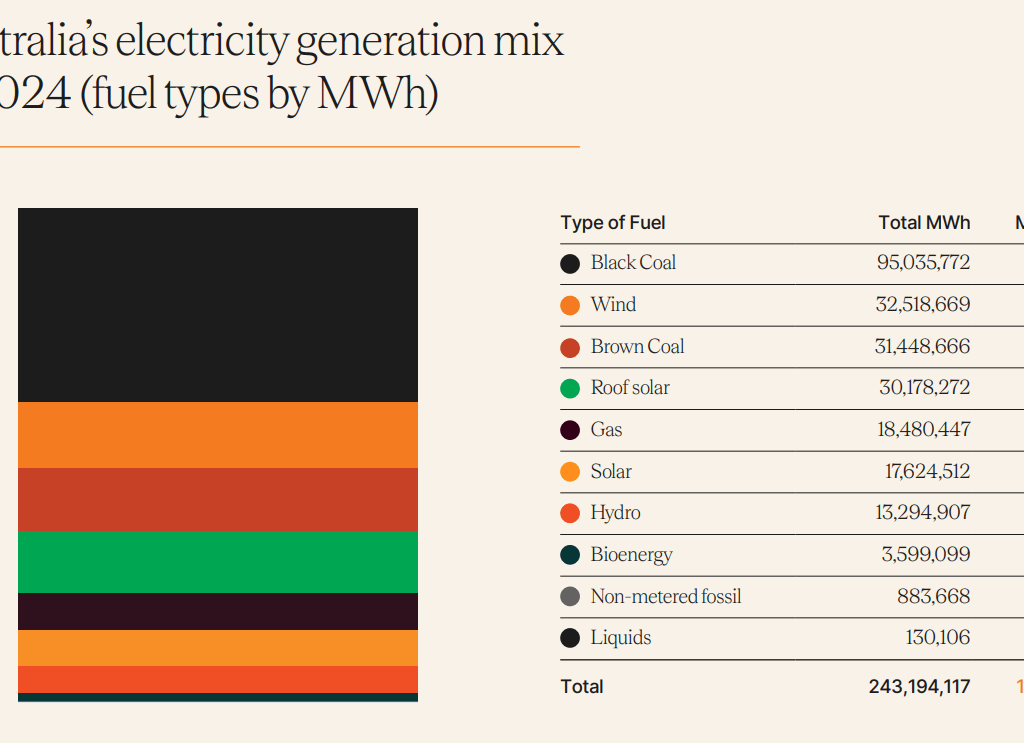
  • Australia surpassed four million rooftop solar installations in 2024 with rooftop solar generating 12.4 per cent of Australia’s total electricity, coming in close behind wind at 13.4 per cent.
  • 40 per cent of Australia’s electricity was provided by renewables in 2024, with fossil fuels still making up the majority of Australia’s energy mix (60%).

Source:
The Clean Energy Council’s Quarterly Investment Report: Large-scale renewable generation and storage Q1 2025

lithium-ion-battery-recycle

Battery breakthrough as 99.99% of lithium extracted from old cells

New recycling method offers environmentally friendly way to deal with increasing e-waste from old smartphones and electric cars.

Scientists have discovered a way to recycle nearly 100 per cent of the materials within lithium-ion batteries. The eco-friendly method can help address the urgent need to deal with e-waste from old smartphones and electric cars, according the the team of Chinese researchers who came up with it.

The discovery uses tiny micro batteries to break down the lithium, nickel, cobalt and manganese from a battery, before using an amino acid to extract the metals.

The use of glycine as the amino acid avoids using harsh chemicals for the recycling process, as well as the creation of toxic byproducts. The newly developed system is able to recover 99.99 per cent of the lithium, 96.8 per cent of the nickel, 92.35 per cent of the cobalt and 90.59 per cent of the manganese from old batteries in just 15 minutes.

The breakthrough came from a collaboration between Central South University in Changsha, Guizhou Normal University, and the National Engineering Research Center of Advanced Energy Storage Materials.

Battery waste has become an increasing problem in recent years due to the massive demand for consumer electronics like smartphones and laptops, as well as the electrification of the automotive industry.

recent report from Stanford University in the US, published in the journal Nature Communications, found that recycling lithium-ion batteries is far more environmentally friendly than mining for new materials.

Current recycling methods, however, can still be damaging to the environment due to the products they use and the emissions they create.

The latest method, which is detailed in the journal Angewandte Chemie International Edition, offers a way to address such issues.

“This green and efficient strategy in neutral solution environment opens a new pathway to realise the large-scale pollution-free recycling of spent batteries,” the researchers wrote in the study, titled ‘A Green and Efficient Recycling Strategy for Spent Lithium-Ion Batteries in Neutral Solution Environment’.

Source:
Scientists discover way to recycle nearly all lithium-ion battery materials — The Independent

Original study: “A Green and Efficient Recycling Strategy for Spent Lithium-Ion Batteries in Neutral Solution Environment” — Angewandte Chemie International Edition

Tesla-Megapacks-arriving-at-Stanwell-BESS-in-Queensland-Image-Stanwell

Tesla Megapack XL units arrive for Stanwell’s 1,200MWh BESS in Queensland, Australia

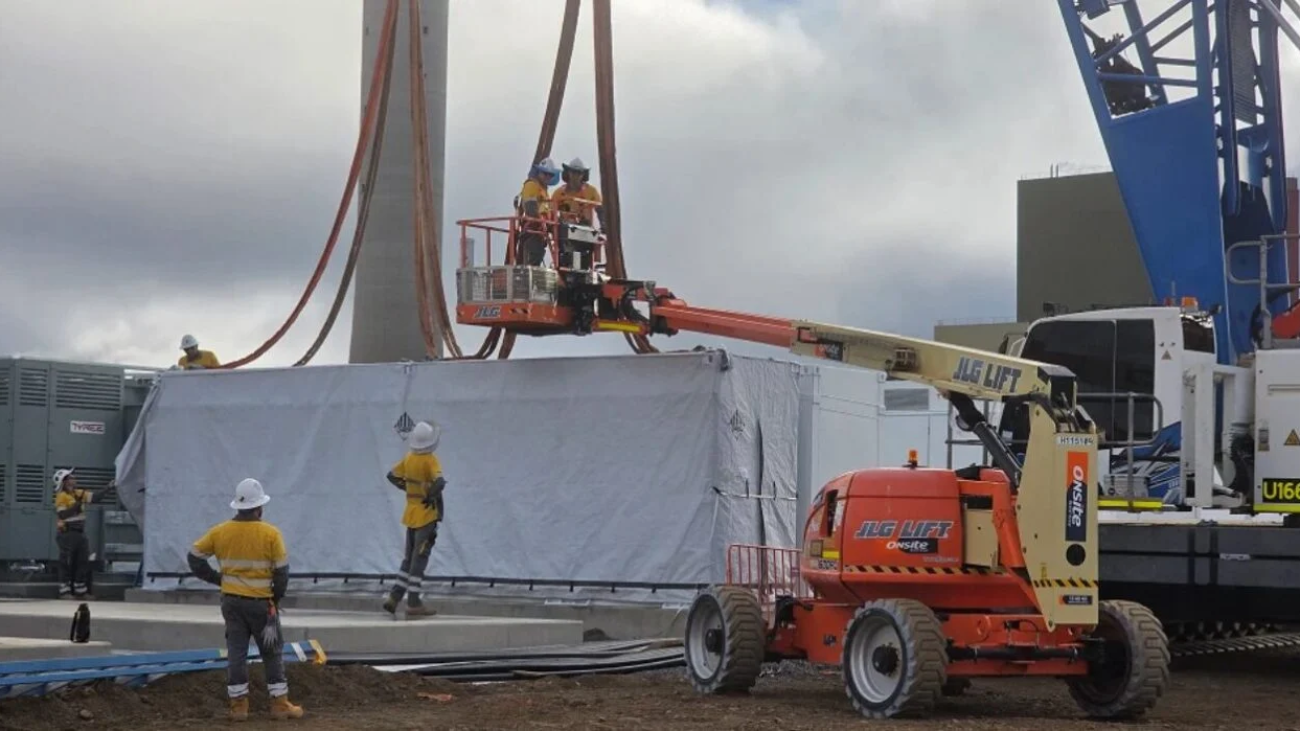
State-owned energy company Stanwell has confirmed the arrival of Tesla Megapack 2XL units at its 300MW/1,200MWh battery energy storage system (BESS) at Stanwell Power Station in Queensland, Australia.

Over the coming months, 324 Megapack units will be delivered to complete the 4-hour duration battery system being constructed adjacent to Stanwell’s coal-fired power station.

The BESS is a cornerstone of the Queensland government’s strategy to transition the site, located about 22km from Rockhampton, to clean energy resources. Stanwell plans to transform the power station into the Stanwell Clean Energy Hub, with the Megapacks being installed by Yurika, another Queensland government-owned company.

Tesla’s Megapack is an integrated solution that includes lithium-ion batteries, a power conversion system (PCS), thermal management, and controls. With increased demand globally for the technology, Tesla’s Megapack factory in Lathrop, California, ramped up to 40GWh annual production capacity by the end of 2024, and the company’s equally sized Megapack ‘Megafactory’ in China has recently gone online.

The Megapack solution’s popularity in Australia led to a memorandum of understanding (MoU) being signed earlier this year between Tesla and the Western Australian government for a battery re-manufacturing facility in Collie.

The service facility is expected to become operational by 2026 and will initially service a range of battery products in Western Australia and the wider Asia-Pacific region.

Tesla reported earlier this month that it made 9.6GWh of global energy storage deployments across its utility-scale Megapack and residential Powerwall lines in the second quarter of this year, ahead of a full results release scheduled for 23 July.

Stanwell BESS: timeline and investment

Stanwell anticipates that all Tesla Megapack XL units will be in place and stored in a safe “shipping mode” by September. Commissioning is expected to follow in November 2025.

Bulk earthworks for the site began in August 2024, and the project is estimated to cost AU$747 million (US$482 million). The Stanwell BESS is scheduled to supply electricity to the grid and the National Electricity Market (NEM) by May 2027.

Angie Zahra, Stanwell Central Generation’s general manager, emphasised the importance of the BESS in the company’s diversification strategy.

“Capable of discharging 300MW of energy for up to four hours (1200MWh), our mega battery will be one of the largest in Queensland. It is just one part of the 800MW of battery energy storage capacity we have in our pipeline,” Zahra said.

In addition to the Stanwell BESS, the company is developing the 300MW/600MWh Tarong BESS in Queensland, which will be part of the Tarong Clean Energy Hub.

Construction of the standalone battery storage asset at the Tarong Power Station site began in August 2023, with plans to be fully operational by mid-2025.

Like the Stanwell BESS, the Tarong project will utilise Tesla Megapack 2XL battery units, with 164 units planned for installation.

Stanwell’s collaboration with Quinbrook for the Supernode BESS

Earlier this year, Stanwell secured an additional 250MW/1,010MWh of BESS capacity through an offtake agreement with global investment manager Quinbrook Infrastructure Partners for the Supernode BESS.

This agreement confirmed the third stage of the Supernode BESS, located at the “strategic” South Pine site. With this deal, the Supernode BESS expanded to 750MW/2,540MWh, making it one of the largest battery systems in the NEM.

The agreement with Stanwell is contingent on Quinbrook meeting specific conditions, including achieving financial close for the project by 30 September 2025.

Source:
Energy-Storage.news: Tesla Megapack XL units arrive for Stanwell’s 1,200MWh BESS in Queensland, Australia

Battery-Technology-Charging

Battery Breakthrough: Scientists Double Performance With Dry Electrodes

A dry-process zinc-iodine battery from Adelaide offers safer, longer-lasting energy storage with high capacity and stability.

Researchers at the University of Adelaide have developed a new dry electrode for aqueous batteries that produces cathodes with more than twice the performance of both iodine and lithium-ion batteries.

“We have developed a new electrode technique for zinc–iodine batteries that avoids traditional wet mixing of iodine,” said the University of Adelaide’s Professor Shizhang Qiao, Chair of Nanotechnology, and Director, Centre for Materials in Energy and Catalysis, at the School of Chemical Engineering, who led the team.

“We mixed active materials as dry powders and rolled them into thick, self-supporting electrodes. At the same time, we added a small amount of a simple chemical, called 1,3,5-trioxane, to the electrolyte, which turns into a flexible protective film on the zinc surface during charging. This film keeps zinc from forming sharp dendrites – needle-like structures that can form on the surface of the zinc anode during charging and discharging – that can short the battery.”

Safer, sustainable alternative to lithium-ion

Aqueous zinc–iodine batteries provide exceptional safety, sustainability, and cost benefits for grid-scale energy storage, but their performance still lags behind that of lithium-ion batteries.

The team published their results in the journal Joule.

“The new technique for electrode preparation resulted in record-high loading of 100 mg of active material per cm2,” said the University of Adelaide’s Han Wu, Research Associate, School of Chemical Engineering, from the team that worked on the study.

“After charging the pouch cells we made that use the new electrodes, they retained 88.6 per cent of their capacity after 750 cycles and coin cells kept nearly 99.8 per cent capacity after 500 cycles. We directly observed how the protective film forms on the zinc by using synchrotron infrared measurements.”

Real-world potential for grid-scale storage

With high iodine loading and a strong zinc interface, each battery can store significantly more energy at a lower weight and cost. This advancement could move zinc–iodine batteries closer to practical use in large-scale or grid storage applications.

There are several advantages of the team’s invention over existing battery technology:

  • Higher capacity: dry electrodes hold more active material than those made with wet processing, which usually reach less than 2 mA h cm².
  • Lower self-discharge and shuttle loss: the dense structure of the dry electrodes helps prevent iodine from leaking into the electrolyte, which would otherwise reduce performance.
  • Better zinc stability: a protective film forms in place during operation, preventing dendrite growth and significantly extending the battery’s cycle life.

“The new technology will benefit energy storage providers – especially for renewable integration and grid balancing – who will gain lower-cost, safer, long-lasting batteries,” said Professor Qiao.

“Industries needing large, stable energy banks, for example, utilities and microgrids, could adopt this technology sooner.”

The team has plans to develop the technology further to expand its capabilities.

“Production of the electrodes could be scaled up by using to reel-to-reel manufacturing,” said Professor Qiao.

“By optimizing lighter current collectors and reducing excess electrolyte, the overall system energy density could be doubled from around 45 watt-hours per kilogram (Wh kg−1) to around 90 Wh kg−1. We will also test the performance of other halogen chemistries such as bromine systems, using the same dry-process approach.”

Source: “Aqueous zinc-iodine batteries with ultra-high loading and advanced performance” by Han Wu, Shao-Jian Zhang, Jitraporn Vongsvivut, Mietek Jaroniec, Junnan Hao and Shi-Zhang Qiao, 12 June 2025, Joule.
DOI: 10.1016/j.joule.2025.102000